
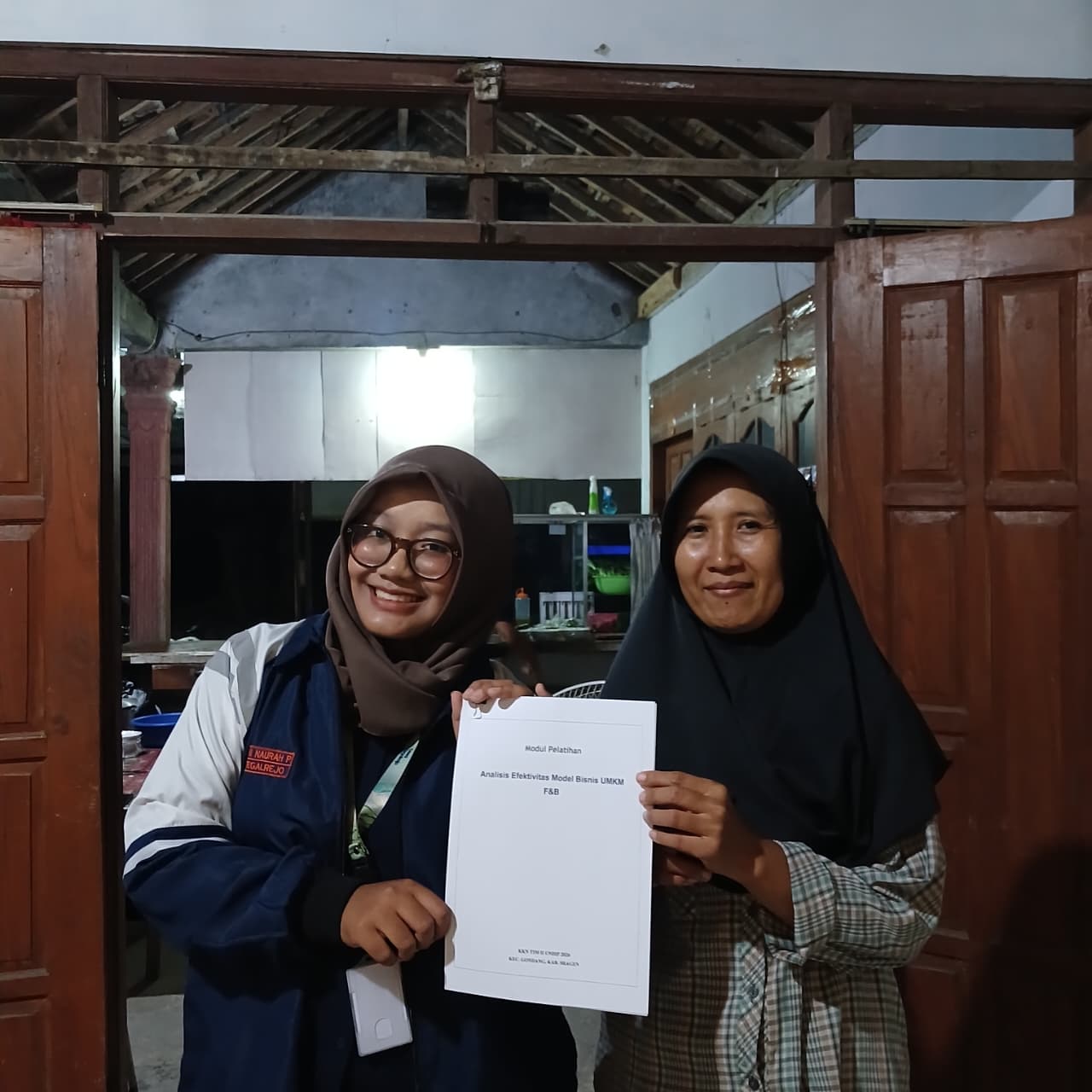
SRAGEN – A community service team of lecturers and students from Diponegoro University (UNDIP) has supported micro, small, and medium enterprises (MSMEs) in Tegalrejo Village, Gondang District, Sragen Regency, in analyzing the processes and business models of their enterprises. The program ran from July to August 2026 under the Lecturer–Student Interaction Community Service scheme for Village Empowerment and Development, Batch II, Fiscal Year 2026.
The team is led by Bimo Suryo Wicaksono, S.M., M.M., a lecturer in the Undergraduate Management Program, together with Tari Purwanti, S.Ant., M.A., and Feri Satria Wicaksana Effendy, S.H., M.H., and 10 KKN students. The program is titled “Business Process Analysis Assistance and Development of Business Growth Strategies Based on Local Potential to Support Village Competitiveness.”
Background
MSMEs play an important role in the economy of Tegalrejo Village. However, most businesses are still run traditionally and rely on habit, without a clear business process or business model analysis. As a result, business owners find it hard to tell which parts of their business are already effective and which need improvement. Yet the quality of MSME management largely determines the competitiveness of the village as a whole.
Activities
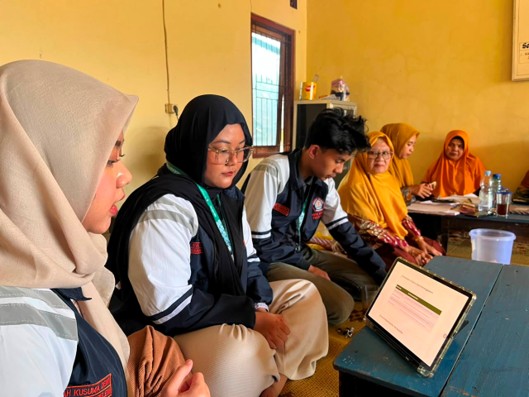
After coordinating with village officials and MSME owners, the team held training on analyzing the effectiveness of business models using the Business Model Canvas framework. The framework divides a business model into nine components, from customer segments, value propositions, and channels to revenue streams and cost structure. Participants learned to answer guiding questions for each component to assess whether their business is running effectively, then applied the method to their own businesses with guidance from lecturers and students.
The team also helped business owners map their operations step by step, from sourcing raw materials and production to pricing, marketing, and sales. During this assistance, owners were guided in calculating the cost components of their business so that selling prices are based on calculation rather than guesswork.
Findings and Outputs
Participants were mostly food and beverage (F&B) business owners. Through the training and assistance, the team found that financial literacy and understanding of business processes among MSME owners still need to be strengthened. The results of the assistance were then developed into a business growth strategy prepared in a gradual and realistic manner, covering added value for products, improved marketing, and cost and pricing management.
The main output of the program is the Training Module on Analyzing the Effectiveness of MSME Business Models. The module has been handed over to business owners and can be used independently by MSME owners and village officials for follow-up training. Participants’ understanding and their application of the assistance were evaluated through direct interviews with MSME owners.
Next Steps
The team recommends several follow-up steps so that the benefits of the program are sustained:
- Continued assistance to ensure the business growth strategies are actually implemented.
- Regular review of business models and cost calculations, especially when raw material prices or market conditions change.
- Assistance in expanding marketing, including digital marketing, and in business licensing to build consumer trust.
- Use of the module by village officials to train other business owners in Tegalrejo Village.
| ABOUT THE PROGRAM Title: Business Process Analysis Assistance and Development of Business Growth Strategies Based on Local Potential to Support Village Competitiveness Scheme: Lecturer–Student Interaction Community Service for Village Empowerment and Development, Batch II, FY 2026, Diponegoro University Partner: Tegalrejo Village, Gondang District, Sragen Regency, Central Java Team leader: Bimo Suryo Wicaksono, S.M., M.M. Media contact: wicaksonobimo@lecturer.undip.ac.id |