
SRAGEN – Karangpelem Village in Kedawung District, Sragen Regency, has plenty of potential that could be developed into businesses, from abundant farm produce to natural springs at the foot of Mount Lawu. Yet many residents do not know where to start. For this reason, the women of the Karangpelem Village PKK (Family Welfare Empowerment) group asked students of the Universitas Diponegoro (Undip) Community Service Program (KKN) to provide training on entrepreneurship.
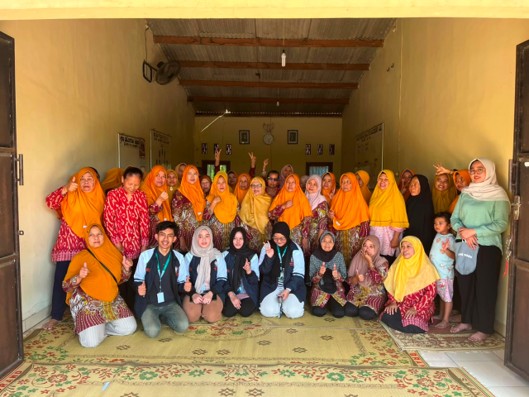
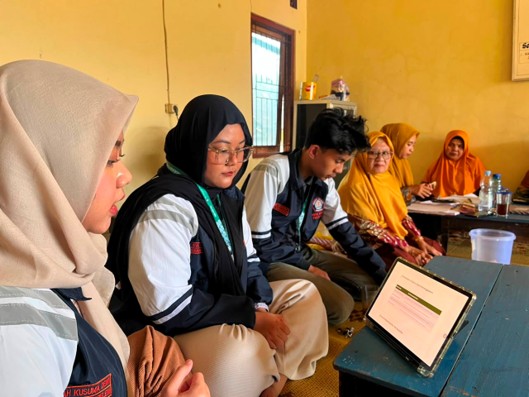
The students responded by holding an Entrepreneurial Mindset Incubation session on Wednesday, 5 August 2026, at the Karangpelem Village Hall. Dozens of PKK members attended in full uniform and stayed until the session ended.
“The women actually already want to start their own businesses. The raw materials are here and the potential is here, but they are still unsure what the first step should be. That is why we were asked to deliver material that is practical and suited to the village’s conditions,” said one of the participants.
In their presentation, the KKN team invited participants to change the way they look at the potential around them. According to the students, the village’s farm produce is still often seen merely as raw commodities whose prices easily drop during the main harvest. In fact, that produce can be processed into higher-value products.
“When harvest prices fall, rice and secondary crops can be turned into snacks or ready-to-eat dishes unique to Karangpelem. So the problems we face can actually become business opportunities,” the speaker continued.
To answer the question of “where to start”, participants were introduced to the 3M Method for finding business ideas:
- Melihat (Observe): recognising the village’s greatest assets, such as farm produce, clear spring water, and local culture like the traditional Untup-untup dance;
- Meniru (Imitate): studying successful small businesses (UMKM) and agritourism ventures in other villages, including how they are managed and how they attract customers;
- Memodifikasi (Modify): adding a distinctive Karangpelem touch as a point of difference, for example pairing traditional snacks with a visit to the Umbul Ngepok spring pool.
The KKN team and participants then mapped Karangpelem’s potential and the business opportunities it offers. These include producing shelf-stable, hygienic dried snacks from local produce, running food stalls integrated with the water tourism site owned by the village enterprise (BUMDes), and offering fruit- and vegetable-picking tour packages.
The KKN team also stressed that business ideas should not stay on paper. Participants were encouraged to form business groups with clear roles for production, marketing and operations, to pool capital through the spirit of gotong royong (mutual cooperation), and to focus on satisfying their first customers.
The session was interactive. Several participants shared the businesses they hoped to start and asked about the practical steps needed to make them happen.
“Until now we were often confused about what kind of business to start and how to go about it. After this session, we have a clear picture that we can begin with what we grow in our own rice fields and gardens,” said the Chair of the Karangpelem Village PKK Movement Team.
Field Supervisor Aji Yudha, S.E., M.M., hopes the activity will be a first step towards home-based businesses run by PKK women that support family incomes and village self-reliance. “We hope this activity will make an impact by increasing interest in entrepreneurship in Karangpelem Village,” said Aji Yudha.
The session closed with a discussion and a group photo of the KKN team and the PKK women of Karangpelem Village. ***